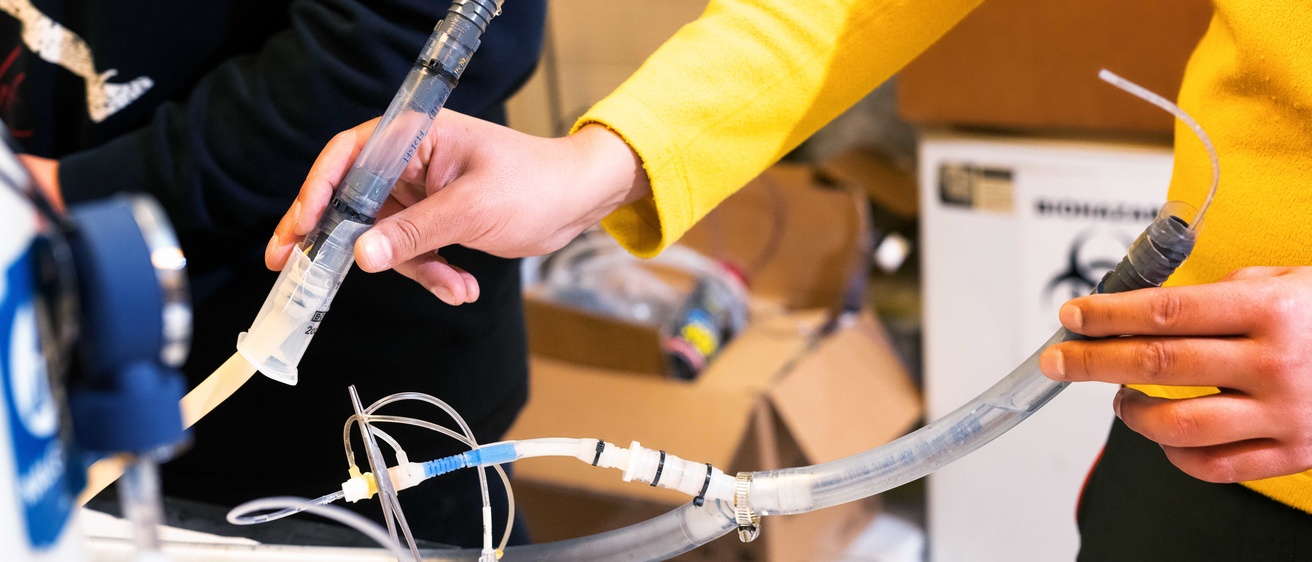
Biomedical Engineering links biology, medicine, and engineering to improve human health. Many Engineering students choose this major as preparation for medical school.
Biomedical Engineering blends engineering, biological science, and medicine to solve a variety of challenges facing the medical world today.
Biomedical engineers consult with physicians to design and evaluate prosthetic devices, work with new materials for implants and tissue-generated implants, perform computer analysis of medical images, and use computers to analyze genetic structures and functions.
Biomedical Engineering at the University of Iowa offers unlimited opportunities for motivated students. From independent research to summer programs and student societies, mentoring programs, many students do it all.
Students choose to study biomedical engineering at Iowa because of the college's academic excellence, individual attention, small-college environment, camaraderie, and tremendous opportunities. U.S. News & World Report ranks Iowa's undergraduate program in the top third of engineering programs nationwide. Approximately 500 new students join the College of Engineering each year. Women account for over 28 percent of Iowa's engineering students; the national average is 25 percent.
Engineering student support services include free tutoring in math, science, and engineering courses for your first two years.
BSE/MS Fast-Track Degree Program
This program is for eligible students who plan to complete both the BSE and MS degrees in Biomedical Engineering at Iowa. Students apply in the second semester of their junior year and, if admitted, will enter that program in the first semester of their senior year. The fast-track program allows for 12 semester hours (s.h.) to be counted toward both their BS and MS degrees.
Information

First-Year

Transfer

International
Within six months of graduating, 96 percent of Iowa graduates are employed, continuing education, or not seeking work. Our Pomerantz Career Center offers multiple resources to help students find internships and jobs.
Engineering is a well-respected profession that is used as a foundation for a variety of careers in industry, medicine, law, government, and consulting.
Engineering majors hold eight of the top ten spots on the list of top-paid majors for bachelor's degree graduates, according to the National Association of Colleges and Employers (NACE).
Engineering Career Services develops and promotes experiential education and professional opportunities for students. Professional staff coordinate the college's co-op and internship program, engage in employer outreach, and host an Engineering Career Fair each semester.
In addition to more than 600 Student Organizations, Iowa students choose from more than 100 Study Abroad Programs and multiple Undergraduate Research Opportunities.
The University of Iowa provides a variety of scholarships to eligible undergraduate students through the Iowa Scholarship Portal. Scholarships are available to first-year, transfer, and currently enrolled students. For additional details on scholarships for your program of study, check directly with the department or college.
Apply early for scholarships. The College of Engineering offers Engineering First-Year Scholarships as well as many other scholarship opportunities for sophomore, junior, and senior students. To learn more, visit the College of Engineering Scholarships.
The Office of Admissions and the Office of Student Financial Aid are great resources for students seeking scholarships.
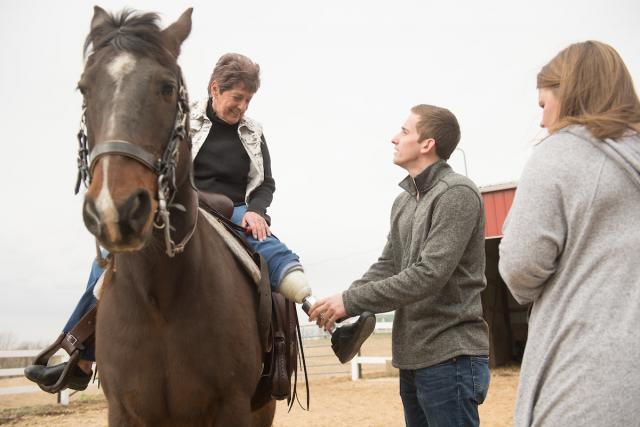
UI engineering students help eastern Iowa woman get back in the saddle
Monna Metcalf has never been the type of woman to complain. During her more than seven decades of life, she’s held a number of challenging jobs, raised two daughters, and lost the lower half of her left leg in a farm accident.
Even the surgeries and physical therapy sessions she endured as a result of the 1994 accident couldn’t bring her down. As part of her recovery process, Metcalf took up horseback riding. She bought a horse named Yankee, the first of several she would own, and started riding near her home in Zwingle, Iowa. She loved riding Yankee, and later Yankee’s son, Rebel, at full gallop across a river or stream—water splashing, her heart swelling with joy.
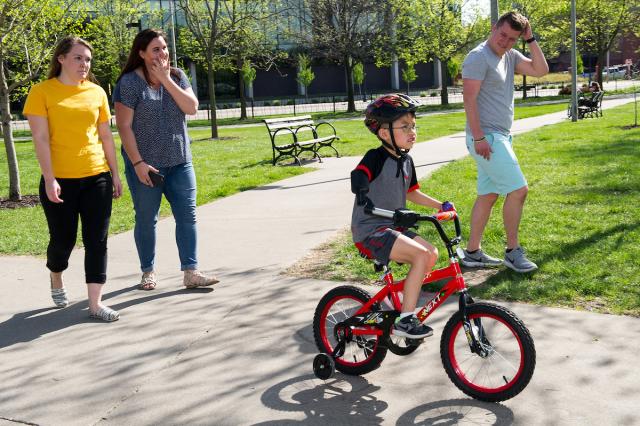
UI College of Engineering students go above and beyond to help 8-year-old ride his bicycle
Eight-year-old Jonny Cole had a wish. Like most kids his age, he dreamed of riding his bike—a red motocross model with a Spiderman bell—around his Cedar Rapids, Iowa, neighborhood and on the bike path with his family.
But Jonny’s wish wasn’t as simple as it sounds. A congenital amputee, he was born without most of his right arm, the result of amniotic band syndrome, a rare birth defect caused when strands of tissue from the amniotic sac wrap around a baby’s finger, hand, arm, or leg, cutting off circulation and stunting development.
Coursework includes mathematics and basic sciences, engineering topics, general education (humanities and social sciences), and an elective focus area. Students may choose one of these focus areas or customize their studies to align with their interests or career objectives:
- Bioimaging
- Biomechanics and Biomaterials
- Cellular Engineering
- Computational Bioengineering