Civil Engineering is about community service, development, and improvement. It involves the conception, planning, design, construction, and operation of facilities essential to modern life, from transit systems to offshore structures to space satellites.
Civil engineers are solvers of real-world problems, meeting the challenges of pollution, traffic congestion, drinking water and energy needs, urban redevelopment, and community planning.
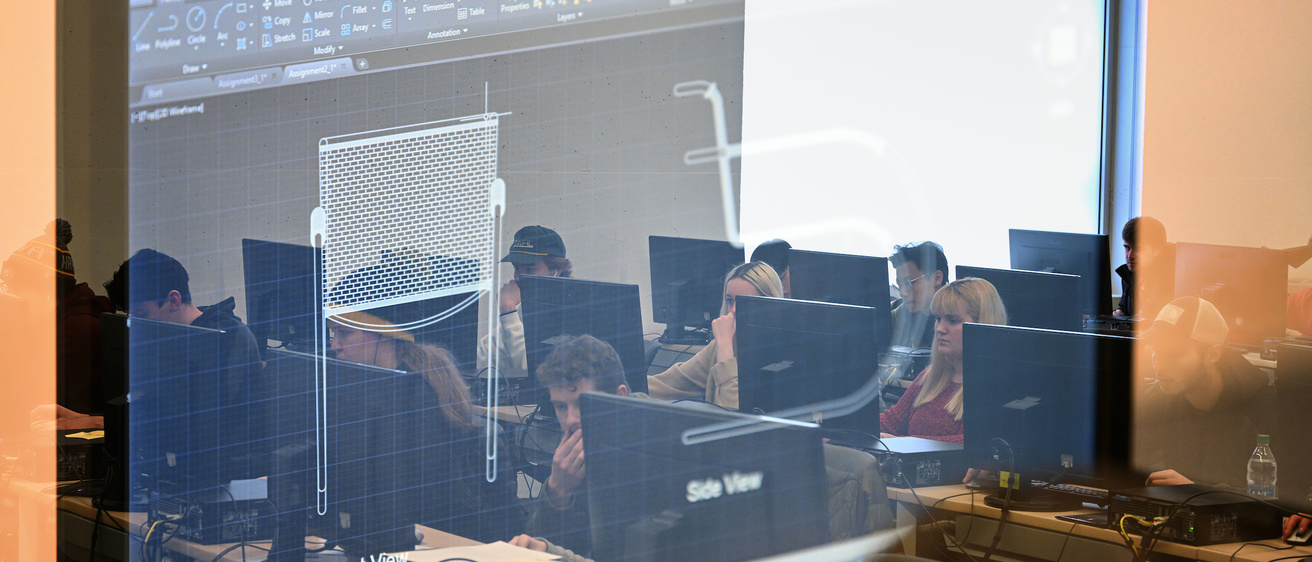
Growth areas in Civil Engineering include infrastructure development, construction management, computer-aided design, engineered environmental systems, and flood-related sciences.
In planning and design, civil engineers work with other engineers, architects, landscape architects, planners, economists, financiers, sociologists, lawyers, and other specialists as members of the design team. Some engineers work in offices while others construct or supervise outdoor projects they have designed. There also is great potential for entrepreneurial work by civil and environmental engineers as they start their own companies.
The Department of Civil and Environmental Engineering is committed to providing high-quality education and research experiences for students. Resources and efforts are focused on areas of unique strength, including water resources engineering, environmental solutions and sustainability, mechanics of solids and structures, nanotechnology, and transportation infrastructure.
The BSE in Civil Engineering is one of eight undergraduate engineering programs in the College of Engineering, which offers excellent opportunities for students to participate in research, internships, Study Abroad, and student organizations.
Students choose to study engineering at Iowa because of the college's academic excellence, individual attention, small-college environment, camaraderie, and tremendous opportunities. U.S. News & World Report ranks Iowa’s undergraduate program in the top third of engineering programs nationwide.
Iowa admits incoming first-year students directly into Engineering. Approximately 500 new students join the College of Engineering each year. Women account for over 28 percent of Iowa’s engineering students; the national average is 25 percent.
Engineering student support services include free tutoring for your first two years of math, science, and engineering courses.
BSE/MS Fast-Track Degree Program
This program is for eligible students who seek to earn both the BSE and MS degrees in Civil Engineering at Iowa. Students apply in the second semester of their junior year and, if admitted, enter the program in the first semester of their senior year. Students admitted to this program will be allowed to: apply three engineering courses (9 s.h.) towards both the BSE and MS degree requirements; take an additional 3 s.h. of graduate coursework before completing their BSE. Once students complete the requirements for the bachelor's degree, they are granted the BSE, and they normally complete the MS degree one year later.
Information
Related Links

First-Year

Transfer

International
Within six months of graduating, 96 percent of Iowa graduates are employed, continuing education, or not seeking work. Our Pomerantz Career Center offers multiple resources to help students find internships and jobs.
Engineering is a well-respected profession that is used as a foundation for a variety of careers in industry, medicine, law, government, and consulting.
Engineering majors hold eight of the top ten spots on the list of top-paid majors for bachelor's degree graduates, according to the National Association of Colleges and Employers (NACE).
Engineering Career Services develops and promotes experiential education and professional opportunities for students. Professional staff coordinate the college's co-op and internship program, engage in employer outreach, and host an Engineering Career Fair each semester.
In addition to more than 600 Student Organizations, Iowa students choose from more than 100 Study Abroad Programs and multiple Undergraduate Research Opportunities.
Engineering student organizations, fraternities and sororities, and national honorary societies offer many opportunities to develop your leadership abilities.
Scholarships
The University of Iowa provides a variety of scholarships to eligible undergraduate students through the Iowa Scholarship Portal. Scholarships are available to first-year, transfer, and currently enrolled students. For additional details on scholarships for your program of study, check directly with the department or college.
Apply early for scholarships. The College of Engineering offers Engineering First-Year Scholarships as well as many other scholarship opportunities for sophomore, junior, and senior students. For more information, visit College of Engineering Scholarships.
The Office of Admissions and the Office of Student Financial Aid are great resources for students seeking scholarships.
Iowa's Civil Engineering Program provides graduates with scientific and technical knowledge and equips them with problem-solving, teamwork, and communication skills that will serve them throughout their careers. The program emphasizes both a broad education in Civil Engineering fundamentals and the opportunity for in-depth learning.
Students complete the BSE core requirements as well as the curriculum designed for their major, which covers four major stems: mathematics and basic sciences, engineering topics, the general education component, and an elective focus area. Students may choose an approved focus area or work with their advisor to customize an area that aligns with their interests or career objectives.
Visit Civil Engineering in the UI General Catalog to learn about course requirements and graduating with honors.